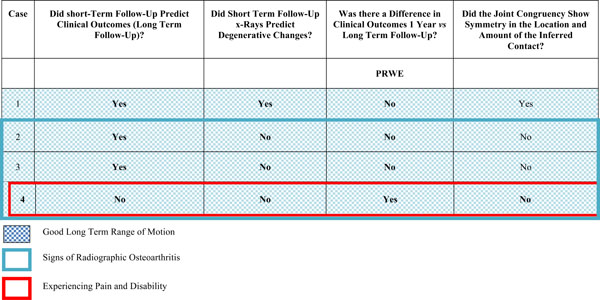
Table 3: Predictive values of short-term follow-up X-rays in predicting clinical outcomes and degenerative changes and joint
congruency measures. At short-term follow-up, radiographs in all four cases indicate that fracture reduction has healed
in good alignment and patients are experiencing low or average pain and disability. However, in three out of four cases,
these patients developed degenerative changes seen in their injured wrist. At long term follow-up all patients had good
range of motion, but one patient was experiencing high pain and disability. Proximity maps indicate deviations in the
overall joint congruency between the injured and non-injured wrist of patients (symmetry of inferred contact) who have
degenerative changes seen approximately 10 years later post fracture injury. This suggests that patients may need to be
instructed that even mild mal-alignment can result in post-traumatic arthritis, but that it is possible that they will be
symptom free in the longer term.